

Mastering German: Why the B1 Certificate is an Important Turning Point in Your Language Journey
In today's globalized world, learning a brand-new language opens doors to numerous chances, both personally and professionally. Amongst the numerous valuable languages to find out, German stands out as a powerful tool for interaction, particularly in Europe, where it is among the most extensively spoken languages. For those embarking on the journey to discover German, getting a B1 certificate is a vital milestone that demonstrates your efficiency in the language and significantly improves your language abilities, confidence, and mobility.
What is the German B1 Certificate?
The German B1 certificate is granted by recognized language organizations such as the Goethe-Institut, TestDaF, or TELC to people who successfully pass a standardized exam evaluating their language proficiency. The B1 level represents the Common European Framework of Reference for Languages (CEFR), which is a global standard for describing language capability. According to the CEFR, accomplishing the B1 level indicates that you are an "independent user" of the language.
At the B1 level, you are anticipated to:
Comprehend the primary points of clear, standard input on familiar topics, such as work, school, leisure, and family.
Deal with most scenarios while traveling in areas where German is utilized.
Produce basic, coherent texts on topics of individual interest or daily matters.
Explain experiences, events, dreams, and ambitions, and offer justifications or explanations for your opinions.
In essence, the B1 certificate verifies that you have actually established adequate communication skills and can taking part in everyday life conversations with a degree of fluency and spontaneity.
Why Is the German B1 Certificate Important?
1. A Stepping Stone for Further Learning
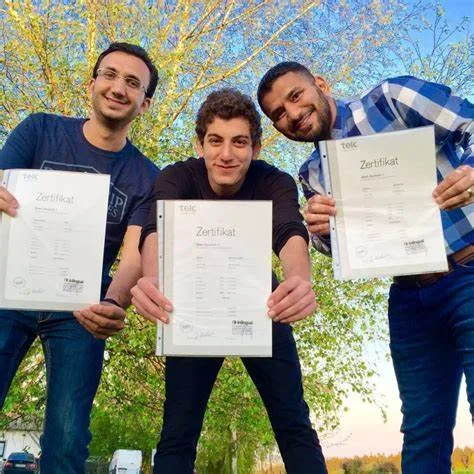
For many students, the B1 level works as a strong structure for more sophisticated language research study. It marks the shift from basic language use (A1 and A2 levels) to sophisticated proficiency (B2 and C1 levels). Mastering B1 material assists you take on more intricate grammar structures, expand your vocabulary, and with confidence engage in much deeper conversations. It's an important checkpoint in ending up being proficient in German.
2. Immigration and Residency Requirements
In numerous German-speaking nations, such as Germany, Austria, and Switzerland, the B1 certificate is typically a requirement for immigration and residency procedures. For example, people making an application for irreversible residency in Germany or those planning to reunite with household members are often asked to provide evidence of German language skills at the B1 level to show their capability to integrate into society and browse vital elements of day-to-day life.
3. Educational and Career Opportunities
For international trainees aiming to study in German universities, attaining a B1 level is often a minimum requirement to enroll in German-taught courses. While some programs may require a greater proficiency (B2 or C1), having the B1 certificate shows that you are on the right track.
In addition, possessing the B1 certificate can open up career chances in German-speaking task markets. Many employers value workers with intermediate language skills who can communicate effectively in German offices. Whether you're operating in engineering, healthcare, hospitality, or technology, having a B1-level understanding of German can set you apart as a prospect.
4. Improved Day-to-Day Integration
For those preparing to live, work, or travel in German-speaking regions, the B1 level guarantees that you can manage daily tasks with confidence. Whether it's shopping, understanding mass transit statements, visiting a doctor, or having little talk with neighbors, the B1 certificate guarantees that you're equipped to navigate life in Germany, Austria, or Switzerland with ease.
5. A Confidence Booster
Making the B1 certificate is a testimony to your hard work, dedication, and progress in discovering the German language. It increases your confidence and encourages you to push forward in your language-learning journey. Understanding that you've reached a functional level of interaction in German is both empowering and rewarding.
How to Prepare for the German B1 Exam
Preparing for the German B1 exam requires time, practice, and the ideal technique. Here are telc zertifikat b1 to set you up for success:
Enroll in a Language Course
Joining a structured B1-level German course, either online or in-person, can help you methodically discover the essential grammar, vocabulary, and interaction abilities.
Practice Speaking Regularly
Find language exchange partners, attend conversation meetups, or deal with a tutor to improve your speaking skills and pronunciation. Speaking practice is vital for the B1 exam, as oral communication is a crucial part.
Focus on Listening Skills
Listen to German podcasts, see TV shows or YouTube videos, and immerse yourself in the language. This will help you get used to different accents and improve your comprehension.
Develop Your Writing and Reading Skills
Practice composing essays, letters, and emails in German to develop your composed interaction. Likewise, read articles, books, or papers on familiar topics to broaden your vocabulary and understanding.
Acquaint Yourself with the Exam Structure
Each institution offering the B1 exam may have somewhat various formats. For example, Goethe-Institut exams consist of sections on reading, composing, listening, and speaking. Familiarize yourself with the exam structure, practice sample questions, and take mock exams to build self-confidence.
Correspond and Practice Daily
Finding out a language needs constant effort. Set aside day-to-day time to study and practice. Apps like Duolingo, Babbel, or Memrise can help strengthen vocabulary and grammar on-the-go.
Conclusion: Take the Leap Towards Fluency
Gaining the German B1 certificate is not just a paper; it's a sign of your capability to get in touch with people, cultures, and opportunities in the German-speaking world. Whether you're aiming to integrate into society, advance your education, or enhance your career potential customers, accomplishing the B1 level is a substantial advance. While it requires devotion and effort, the rewards-- self-confidence, new connections, and broadened horizons-- are well worth it.
So, if you're considering pursuing the German B1 certificate, take that leap and begin preparing today. The journey of finding out German may be challenging at times, however the sense of achievement you'll feel when you hold that certificate in your hands makes it all beneficial. Viel Erfolg! (Good luck!).